
10 Places Where Locals Love to Go in Kyoto
Cool Places in Kyoto You Might Not Know
Which places do locals love to go in Kyoto? The ancient capital is rich in history and tradition and packed with world heritage sites. Along with some of Japan’s most iconic temples like Kinkaku-ji (also known as the “Golden Temple”) and Kiyomizu-dera, there’s also Nijo Castle, where imperial rule was restored.
In recent times, the whole city of <a href=“/go/japan/kyoto”>Kyoto</a> has become a global tourist magnet. So it’s worth exploring nearby places outside of central Kyoto, too. There might just be cool places in Kyoto you might not know or have heard of. Try heading to suburbs like Arashiyama, Sagano, Kurama, Kifune, Uji, and Ohara, and you’ll find some stunning contrasts with shrines and temples set in beautiful natural surroundings.
1. Kinkakuji
Temple of the Golden Pavilion

Categoría: Parejas, Historia, Grupos
The Temple of the Golden Pavilion (Kinkakuji) is an iconic Kyoto landmark named after the famous golden reliquary hall that reflects on the Mirror Pond (Kyoko-chi). Officially called Rokuonji, the temple was designated as a World Heritage Site by UNESCO In 1994 as one of the Historic Monuments of Ancient Kyoto. The temple represents the luxurious and gorgeous Kitayama culture.
The golden 3-tiered temple building is spectacular, enhanced by the garden that surrounds the Mirror Pond. It’s a Zen garden with a path around a central pond and is designated as a National Special Historic Site and Place of Scenic Beauty. No matter when you visit, you’ll be able to enjoy seasonal colors. Más información
Ubicación: 1 Kinkakujicho, Kita Ward, Kyoto 603-8361, Japan
Horarios: Daily from 9 am to 5 pm
Teléfono: +81 (0)75-461-0013

Kinkakuji
2. Ginkakuji
Temple of the Silver Pavilion
Categoría: Parejas, Historia, Grupos
The Temple of the Silver Pavilion (Ginkakuji) dates back to the Muromachi Period of 1338–1573 and is renowned for its simple beauty based on the concept of “Wabi-sabi,” deeply influenced by Zen Buddhism. The building itself is an icon of Higashiyama culture and one of the “Historic Monuments of Ancient Kyoto,” a UNESCO World Heritage Site.
Unlike Kinkakuji, with its golden-leafed hall of relics, there’s no silver leaf applied to the Kannonden hall of relics at Ginkakuji. The beauty of the site extends to the Chisenkaiyushiki Teien Garden, with its representation of waves with white sand, and the conical Kogetsudai and Kinkyochi Pond. It’s easy to get here too; just catch the bus from JR Kyoto Station.
Ubicación: Ginkakujicho, Sakyo Ward, Kyoto 606-8402, Japan
Horarios: March–November: Daily from 8.30 am to 5 pm. December–February: Daily from 9 am to 4.30 pm
Teléfono: +81 (0)75-771-5725
Ginkakuji
También te recomendamos consultar
3. Sanjusangendo
One of Kyoto’s iconic Buddhist Temples
Categoría: Parejas, Historia, Grupos
Sanjusangendo is a Buddhist temple that was built in 1164 by Tairano Kiyomori on the premises of the Imperial Villa of former emperor Goshirakawa Joko. Officially known as Rengeo-in Hondo, the temple was destroyed by fire before being reconstructed in 1266. Sanjusangendo means ‘33 intervals’, derived from its structure of 33 columns standing 120 meters tall in the main hall. The number 33 comes from the number of times that Kannonbosatsu is said to reincarnate.
You’ll be bowled over by the 3-meter-high, 1,000-armed Kannon (Senju Kannon) sitting statue together with the standing statues of 1,000 bodies of the goddess of mercy. In front of the 1,000 statues, you’ll find its 28 guardian deities (Kannon Nijuhachi Bushu) and the Wind God (Fujin) and Thunder God (Raijin). All of these are National Treasures and masterpieces of Kamakura sculpture, including the Honzon by legendary sculptor Tankei, along with 124 Buddhist statues engraved in the Heian era (the 8th to 12th century). To get here, it’s a 7-minute walk from Shichijo Station on the Keihan Line, or you can take a bus from JR Kyoto Station.
Ubicación: 657 Sanjusangendomawari, Higashiyama Ward, Kyoto 605-0941, Japan
Horarios: Daily from 8 am to 5 pm. November 16–March: daily from 9 am to 4 pm
Teléfono: +81 (0)75-561-0467
Sanjusangendo
4. Fushimi Inari Taisha
An important Shinto shrine in Kyoto
Categoría: Parejas, Historia, Grupos
Fushimi Inari Taisha is the mother temple of the 30,000 Inari shrines found across Japan. The Senbon Torii, which literally means “1,000 Sacred Gates,” is internationally famous as one of Japan’s top Instagrammable locations. You’ll always find visitors from around the world taking photos of these iconic red gates.
You can visit at any time of day, but the illuminations at night are particularly stunning. Its history dates back to 711 during the Nara period (710-794) when the common people worshipped it for blessings at harvest time, prosperity in business, the safety of their families, and to ensure that their wishes would come true.
Ubicación: 68 Fukakusa Kaidocho, Fushimi Ward, Kyoto 612-0882, Japan
Teléfono: +81 (0)75-641-7331
Fushimi Inari Taisha
5. Gion
Kyoto’s temple town
Categoría: Parejas, Historia, Grupos
Gion is the quintessential tourist destination in Kyoto. Enjoy this historical city by walking through stone-paved alleyways where you could encounter the apprentice Geisha known as Maiko. Gion expanded as a temple town centered on Yasakajinjya Shrine, and now it includes many other venerable temples and shrines like Kodaiji, Kenninji, Chion-in, Kiyomizudera, Shoren-in, and Hokanji.
Stone-paved streets like Shirakawa Minami Dori, Hanamikoji, and Ishibekoji, lined with Kyomachiya (Kyoto-style townhouses), enhance the ambience, especially at night. Cultural highlights include Yasui-Konpiragu, known for deifying the god of marriage and separation, Maruyama Park with its famous weeping cherry trees, and the Sanneizaka Preservation District for Groups of Historic Buildings. Take your time to discover the area to the full.
Ubicación: Gionmachi, Higashiyama Ward, Kyoto, Japan
Gion
6. Yasakajinja Shrine
The host of a major matsuri
Categoría: Parejas, Historia, Grupos
Yasakajinja Shrine is the host of the Gion Matsuri Festival, 1 of Japan’s 3 major festivals, in July every year and is a key feature of Kyoto’s summertime traditions. The Yamahoko Float on the 17th and 24th is one of the highlights of the festival and is registered as UNESCO Intangible Cultural Heritage, but it can be very difficult to get tickets for.
Yasakajinja, the shrine known for granting wishes for good health at the end of the year, is affectionately known to the locals as Gion-san. Visiting the grounds is free and it’s open all year round. There are also many other famous shrines in the area. To get here, simply catch the bus from JR Kyoto Station.
Ubicación: 625 Kitagawa, Gionmachi, Higashiyama Ward, Kyoto 605-0073, Japan
Teléfono: +81 (0)75-561-6155
7. Kyoto Imperial Palace
The residence of past emperors
Categoría: Parejas, Historia, Grupos
Kyoto Imperial Palace (Kyotogosho) served as the residence of successive Emperors from 1331 until 1869. It’s a good idea to take the hour-long guided tour provided by Imperial Household Agency staff if you want to get a feel for the history of Kyotogosho, which preserves a number of designated National Cultural Assets.
Believe it or not, both the guided tour and admission are free of charge. So why not take a moment to imagine what it must have been like in ancient times as you enter from Seishomon Gate to admire the prestigious Shishinden, the Seiryoden, which served as a daily living space, and the ceremonial venue of Kogosho. For easy access, catch the bus from Imadegawa Subway Station.
Ubicación: 3 Kyotogyoen, Kamigyo Ward, Kyoto 602-0881, Japan
Horarios: Hours vary (closed on Mondays)
Teléfono: +81 (0)75-211-1215
8. Arashiyama & Sagano
Stroll through a tranquil bamboo forest
Categoría: Parejas, Historia, Grupos
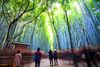
Arashiyama and Sagano have served as settings for various literary classics. A great way to explore is by taking a scenic walk from Togetsukyo bridge. Tenryuji, a World Heritage Site, is a prestigious Buddhist temple, first among the leading temples of Kyoto, while Sogenchiteien Garden, designed by Muso Soseki, still looks like it did 700 years ago.
Next, take a rickshaw through the photogenic Bamboo Forest known as Chikurin-no-michi. If you have time, take in Nonomiya Shrine, the setting of Tale of Genji; Gioji, where Shirabyoshi from the Tale of the Heike lived; and Jojakkoji for its 2-story pagoda. Train lovers should be sure to enjoy the beauty of the ravine with a ride on the Sagano Romantic Train.
Ubicación: Sagaasahi and Togetsu-kyo Bridge, Ukyo Ward, Kyoto 616-8343, Japan
Arashiyama & Sagano
9. Uji
A town rich in culture and history
Categoría: Parejas, Historia, Grupos
Uji, south of the city of Kyoto, has been the site of countless historical events with rich nature as its backdrop. There’s Byodo-in Temple and Ujigami Shrine (both registered as World Heritage Sites), and not to mention Ujibashi Bridge, which is closely tied to the Tale of Genji. In autumn, when the leaves turn red and golden, the Phoenix Hall of Byodo-in is especially popular for the reflection it casts on the water’s surface. Special night visits are also held for a limited period.
Honden (the main sanctuary building) and Haiden (the front shrine) of Ujigami Shrine, which serves as the Tutelary Shrine of Byodo-in, are the oldest existing shrine buildings. Obaku-san Manpuku-ji was founded in 1661 by the Zen master Ingen from Min in China, and today you can find here an unchanged temple complex layout from the Ming dynasty style. There’s also a rare opportunity to enjoy Chinese-style Buddhist cuisine known as Fucha Ryori (reservation required). Uji is also the hometown of Japan’s famous Uji tea, so don’t forget to try out the area’s various kinds of deserts based on Matcha tea. Uji is an easy 30-minute train journey from Kyoto Station.
Ubicación: Uji, Kyoto, Japan
10. Amanohashidate
One of Japan’s most scenic spots
Categoría: Historia, Grupos
Amanohashidate, a sandbar in Miyazu Bay, is one of the most picturesque places in Kyoto. The confluence of the River Noda flowing into Miyazu Bay and the current from the open sea has formed a unique landscape with sand and gravel deposited into the sea.
The origin of Amanohashidate is said to go back to the old mythology of Izanaginomikoto and Izanaminomikoto giving birth to the country. Renting bicycles is also a good idea if you want to get up close to admire the beautiful nature in this designated quasi-national park. To get here, take the Hashidate Train from Kyoto Station to Amanohashidate Station.
Ubicación: Miyazu, Kyoto, Japan
Teléfono: +81 (0)772-22-8030
Este artículo incluye opiniones del equipo editorial de Go Guides. Hoteles.com compensa a sus autores por los artículos que se muestran en el sitio. La compensación puede incluir costos de viaje y otros costos.